

I’m Alley Kocinski
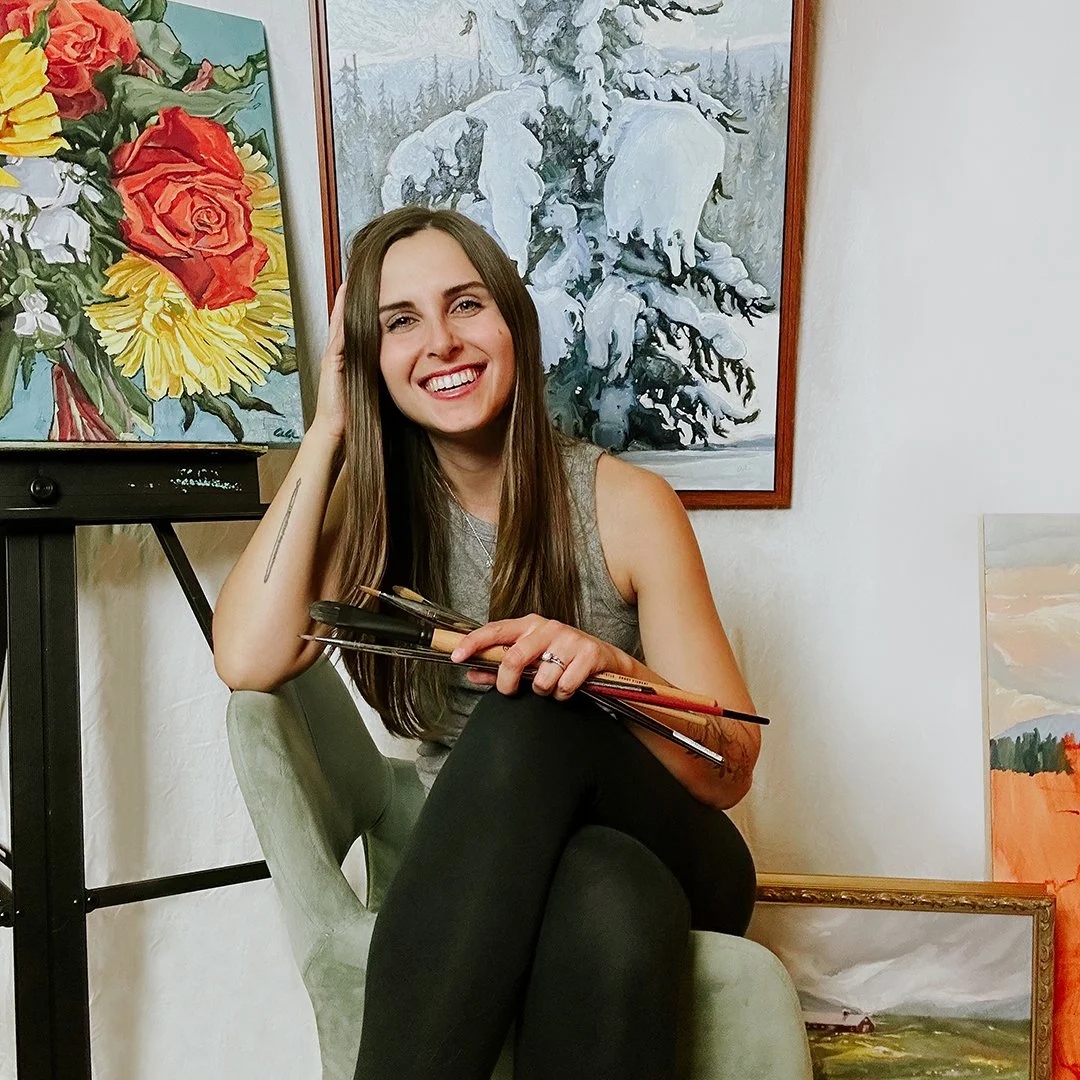
I paint to see and appreciate the world around me more deeply. It’s my way of slowing down and quieting my mind, and I also simply really love the process. I love the way paint flows, the magic of color theory, and the energy in brushstrokes.
I’m lucky to have grown up in a creative family where the arts were valued and encouraged (I’m actually a third generation artist!). I painted a lot growing up, although I bounced around different mediums quite a bit. I learned through traditional programs as well as my own independent practice, and I spent a year as an art major in college before taking some time away from traditional arts.
I picked up a brush again in 2019 and I pretty much haven’t put it down ever since! I paint using mostly oils and gouache, and I like to work impressionistically with a lot of expressive, visible brushwork. I love impressionism because there’s an aspect of imagination for the viewer, where the eye and the mind fill in the blanks, and I think that is so beautiful.
I am currently based in the northern foothills of Colorado for most of the year, although I spend a few months each year back in Illinois where I grew up.
Gallery Representation
-
I’m currently only accepting commissions that do not rely only on your photo references. I’d love to discuss projects that involve working from life, and I’m open to travel. Send me an email at alleykocinskiartist@gmail.com to start the conversation!
Why am I not taking commissions from photos? Because decisions such as composition, angle, and lighting have a massive impact on a piece of artwork. By working from photos that someone else took, those creative decisions become extremely limited. I also feel that it’s so important to connect with my subject in real life in order to understand the energy and the 3D form.
-
The term “plein air” is a french phrase meaning “in open air”. When an artist creates en plein air, it means they are creating outdoors, on location.
Painting from life in nature provides a lot of unique challenges - quickly changing light and shadows, seeing paint colors differently in the sunshine or shade, and being impacted by the elements - heat, cold, rain, wind, even bugs.
In my opinion, these factors give plein air paintings a special, raw feeling. The physical authenticity of being created on-location adds something beautifully intangible to the artwork.
I paint both plein air and in a studio setting, and the observations from my plein air work provide deeper insight into my studio work as well.
-
I typically sell my work unframed so that you can style it to fit your space.
There are many beautiful ways to display paintings without framing. I usually paint on hard panels so you actually don’t even need to frame them. You can simply prop them up on a shelf, or display them on a small decorative plate stand like these. There’s even these really pretty easel stands!
If you want a traditional frame so you can hang your painting on the wall, I recommend taking the piece to a local frame shop. They’ll have the best quality options and will frame it for you professionally. It can be a bit pricey but it really is worth it.
Of course, you can always frame it yourself too. If you chose to do this, it’s important to never frame an original painting behind glass. If glass is pressed to the surface of a painting, it can get stuck and cause damage. My best advice for framing a painting yourself is to simply remove the glass from the frame and put the painting where the glass was. My painting panels are usually about the same thickness as glass so this swap fits well.
If you have questions feel free to email me!
-
As a one-woman business, I really appreciate your patience with shipping! I paint using oils which take a few weeks to dry, and I often list new pieces while they’re still wet. I try to get dry paintings sent out within a week or so. If you’ve ordered a new piece that’s still wet, please allow a few extra weeks for drying and varnishing. If you have a specific timeline feel free to email me and I’ll do my best to accommodate!
-
The most important thing when packing an original painting is to never place bubble wrap, foam, or any plastic-y material directly on the painting’s surface. The plastic can adhere to the paint and cause damage. Protect the painting’s surface with a layer of nonstick parchment paper (cooking paper from the grocery store works great), and then pad it with bubble wrap or whatever you want before boxing it up.
I also recommend adding a rigid layer like a board to protect it further, and make sure not to pack it too tightly to protect any thickly textured marks.
FAQ
I do not use generative AI in any part of my creative process. Not in my references, not in my titles or words. I value the soul in human creativity.